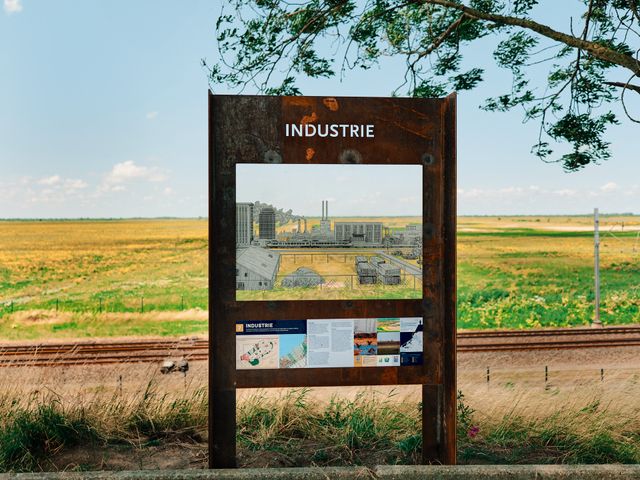
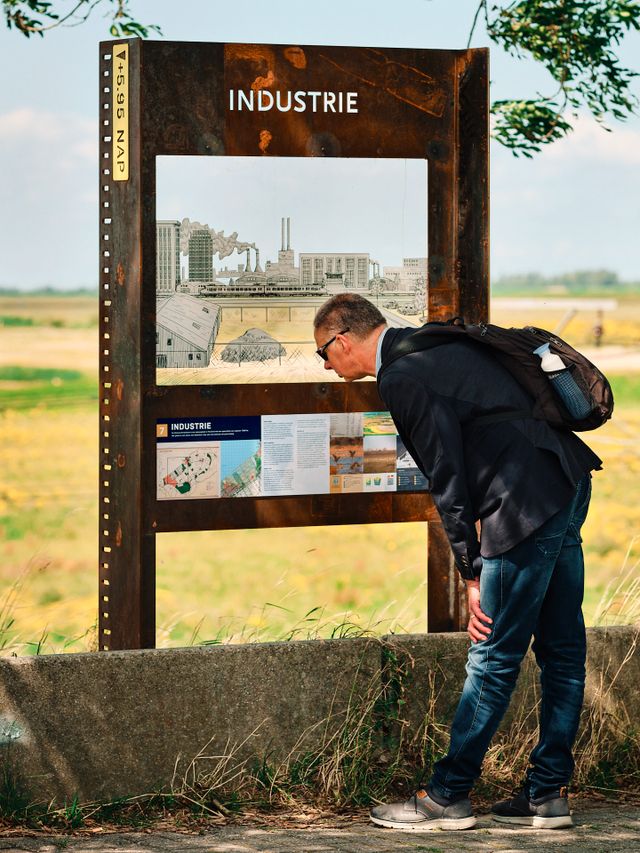
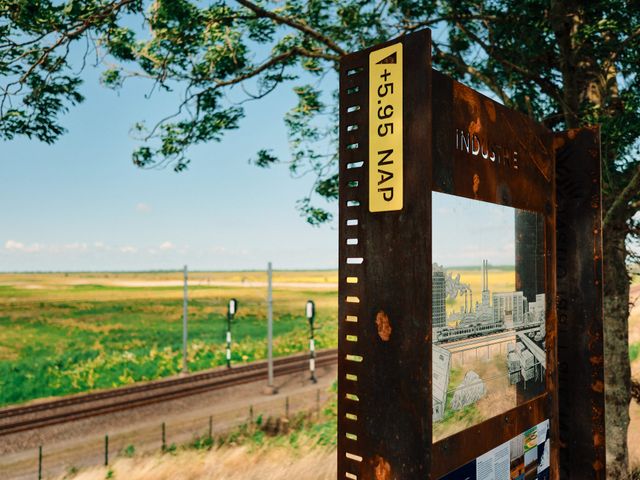
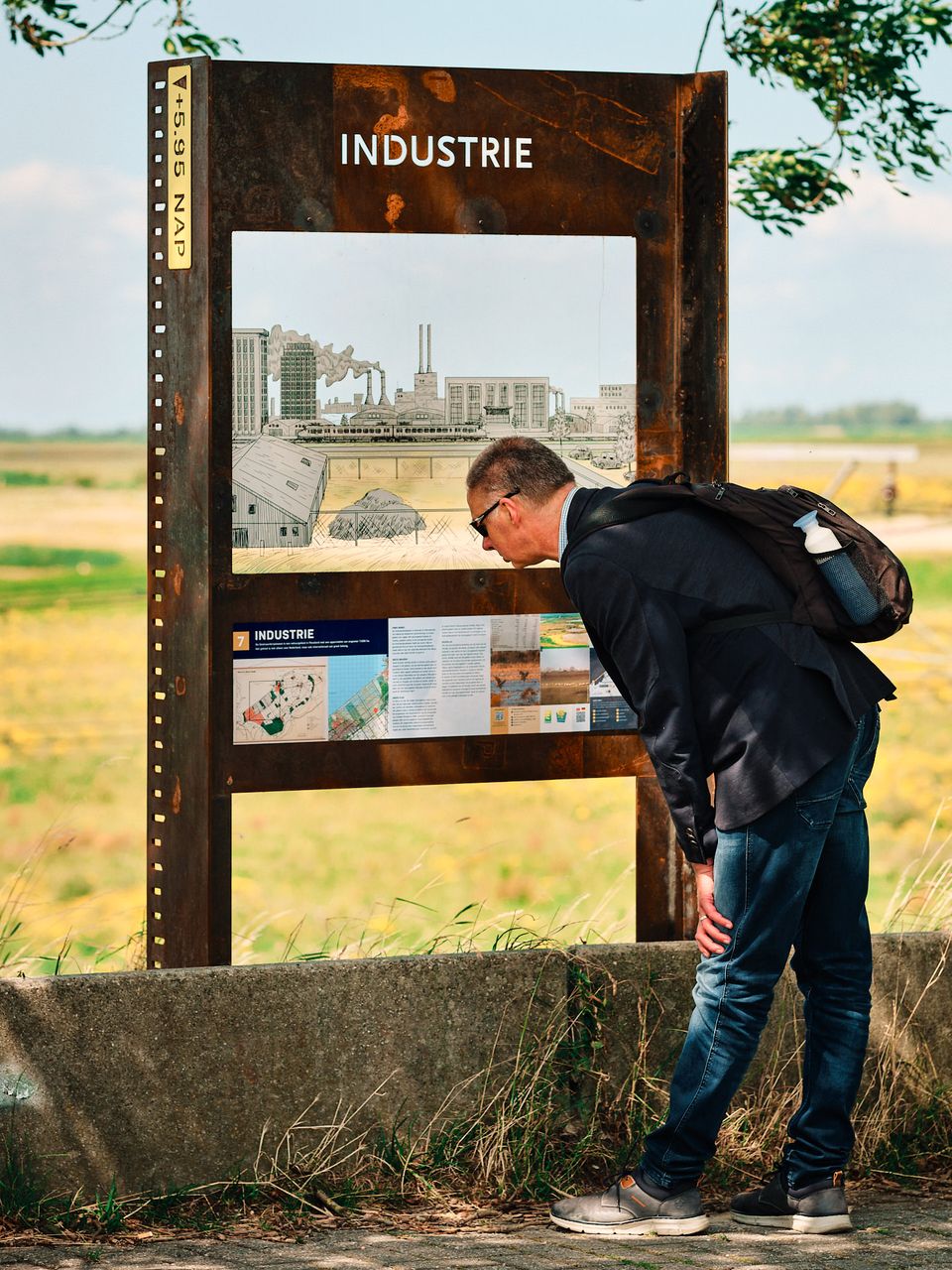
View panel 7. Industry

Unique area
Oostvaardersplassen is of national and international importance as a wetland and wintering and breeding area for birds. The nature reserve consists of marsh, grassland, water and the surrounding forests. Oostvaardersplassen has an enormously rich and varied flora and fauna. The Oostvaardersplassen is part of the water-rich Nieuw Land National Park, which covers no less than 29,000 ha.
Large grazers
From the 1980s, several 'large grazers' were released into the area, with the aim of keeping the area open and varied. First a number of Heck cattle arrived, followed later by red deer and koniks. The konik is a direct descendant of the primeval horse. Every grazer
has its speciality. The edelh...
Unique area
Oostvaardersplassen is of national and international importance as a wetland and wintering and breeding area for birds. The nature reserve consists of marsh, grassland, water and the surrounding forests. Oostvaardersplassen has an enormously rich and varied flora and fauna. The Oostvaardersplassen is part of the water-rich Nieuw Land National Park, which covers no less than 29,000 ha.
Large grazers
From the 1980s, several 'large grazers' were released into the area, with the aim of keeping the area open and varied. First a number of Heck cattle arrived, followed later by red deer and koniks. The konik is a direct descendant of the primeval horse. Every grazer
has its speciality. Besides grass, the red deer also eats bark and buds of bushes and trees, while the konik mainly eats short grass. They mainly graze on the dry parts of the nature reserve. Perhaps you can see the animals from this viewpoint?
Different plan
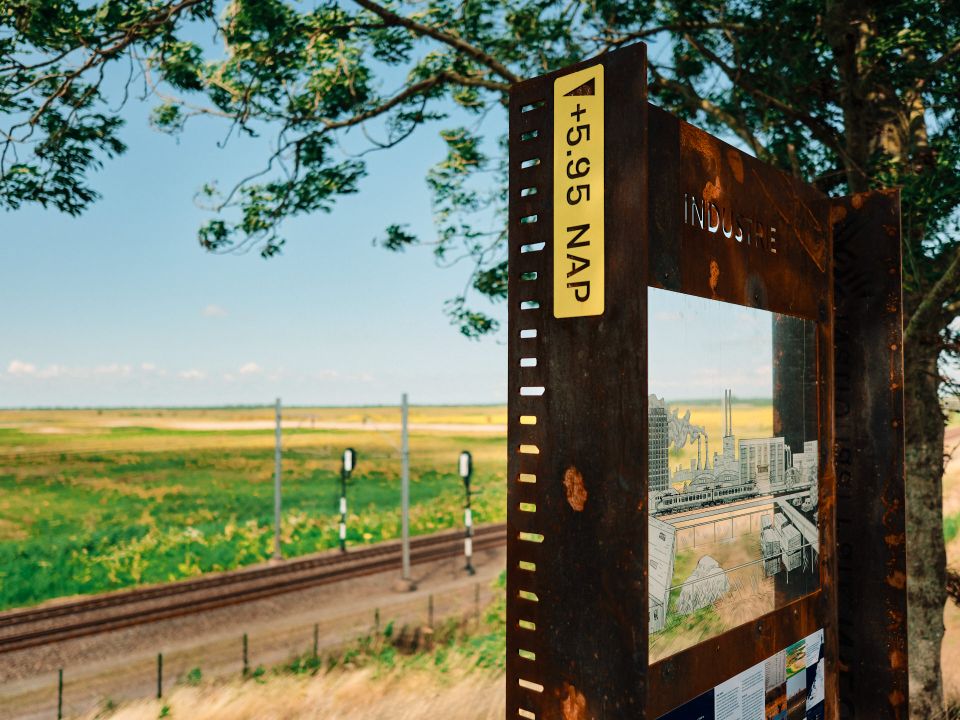
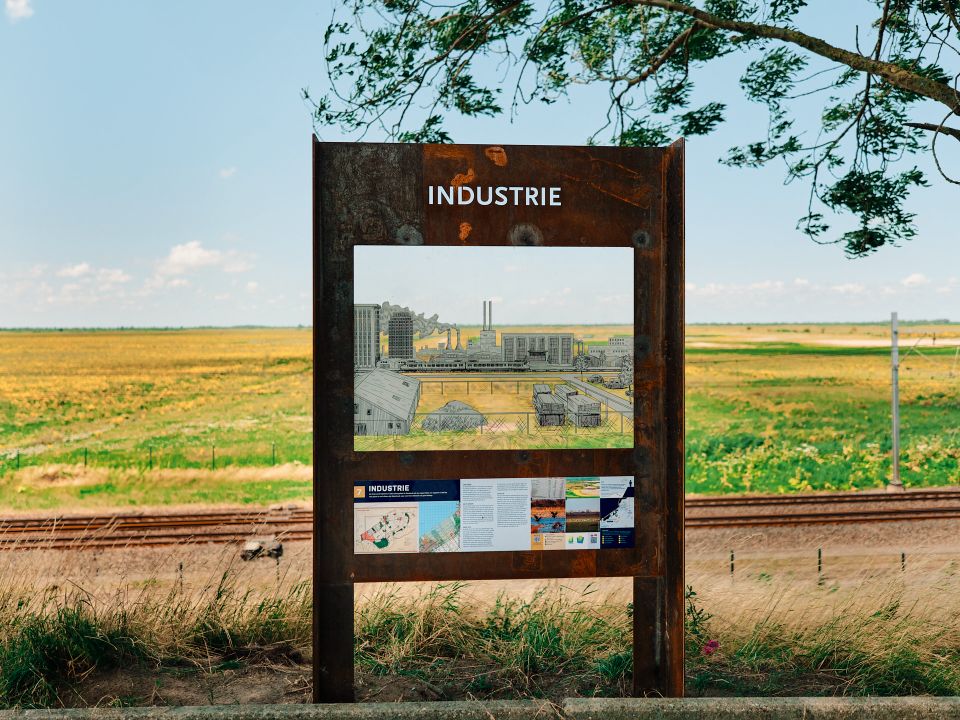
Now you look out over this unique nature reserve. But you could have had a very different view here, namely a view of factories, chimneys and businesses. The area between Lelystad and Almere was originally designated as an industrial zone. After the reclamation
of Southern Flevoland in 1968, a wetland was created in the lower part of the planned industrial area. This vast reed-bed and pond area attracted incredible numbers of birds, such as bearded buntings, ruffs, black-tailed godwits and black terns, even in the first years. Grey geese could safely moult and forage in the lake area. The government therefore decided to scrap the industrial estate and establish the
Oostvaardersplassen as a nature reserve.
Railway
It was originally planned that the route of the Flevolijn, the railway line connecting Weesp with Lelystad via Almere, would run in a straight line through the planned industrial area. This was a logical choice. However, when it became clear that the area between Almere and Lelystad would be reserved for nature, the railway line would split the nature area in two. Numerous nature organisations and the 'Save the
Oostvaardersplassen' rallied and campaigned to save the special nature reserve. 32,000 signatures were collected, against the planned route. Finally, the government decided to lay the railway line around the vast nature reserve. This section of the Flevoland line is also called the bathtub route, because of the two distinctive curves around the nature reserve. From this viewpoint, the curved route can be clearly seen.